
Start with safety, not repeated ignition
If you smell propane, see smoke or suspect a leak, stop trying to light the furnace. Leave the RV and follow the appliance’s emergency instructions. Do not operate switches or create a flame while you suspect gas is present. This is not the moment to test a different setting. A normal no-heat troubleshooting conversation starts only after an immediate safety concern has been addressed. Tell Robert what you noticed and whether the system has been switched off.
Seven observations to make safely
Work through these observations only after ruling out an immediate gas or smoke concern. Stay at the thermostat, interior displays and other normally accessible locations. Keep the furnace housing closed. Recording the sequence helps distinguish a system that never starts from one that stops during ignition.
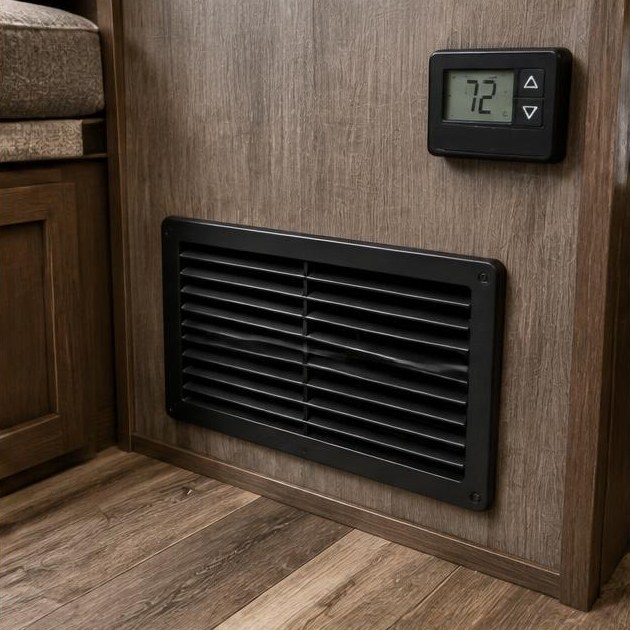
- Read the thermostat mode and setpoint; confirm that heat is requested above the current room temperature.
- Note whether the blower starts after the thermostat calls for heating, allowing the delay described in your manual.
- Listen from a safe location for ignition clicks and record whether they follow the blower.
- Read the battery monitor, noting the displayed value and whether shore power is connected.
- Observe whether other ordinary 12V lights or equipment seem unusually dim or behave erratically.
- Visually check accessible intake and exhaust openings for obvious obstruction without inserting tools or removing guards.
- Read or photograph the furnace identification label only if it is visible without dismantling the appliance.
A running fan does not prove there is heat
A furnace has a sequence involving airflow, ignition and heat production. A fan can run even when later steps do not complete. The sail switch, power supply or ignition system may be involved, but a symptom alone does not identify the failed component. Avoid ordering a part because a discussion online describes the same noise. Your furnace model and exact sequence matter. Record whether it runs briefly, keeps blowing cold air or stops completely after an attempt.
Do not bypass a safety device
A safety switch is part of the appliance’s operating design, not an obstacle to work around. Bridging a switch or forcing repeated ignition can hide a real fault and create a dangerous situation. Leave internal electrical and propane diagnosis to an appropriate technician. You can still help by explaining when the problem began, the battery condition shown on your RV and whether the rig is connected to shore power. Share that information without taking equipment apart.
Make the service call useful
Have your RV year, make and model, furnace details and parking location ready. If you are at a fall campsite near Arcadia Lake, provide the park and site number as well as the town. Describe whether the thermostat responds, the fan runs and ignition clicks occur. Robert provides mobile furnace and heating repair and can discuss the next checks at your RV. Explain your travel plans and ask about appointment availability.
Understand the first minute of operation
Many RV furnaces begin with a blower period before ignition, and the fan may continue after heating stops. Use the timing described for your appliance instead of expecting flame immediately when the thermostat changes. A short observation from the living area can establish whether the sequence begins, advances to clicking or ends without warmth. Note approximate intervals rather than standing beside the exterior exhaust. Keep children away from that outlet because surfaces and exhaust can become hot during normal operation. If the furnace enters a lockout, consult its operating instructions instead of repeatedly interrupting power to restart attempts. Distinguish a normal purge period from a pattern that never produces heat. That distinction gives a technician a clearer starting point while leaving combustion testing and internal measurements to qualified hands.
Separate thermostat behavior from furnace behavior
A blank thermostat display is a different starting symptom from a responsive display followed by a silent furnace. Check only the ordinary controls described in the owner instructions. Confirm the selected mode and note any schedule or temperature setting that might end the call for heat. On systems that share controls with air conditioning, a fan setting may operate equipment differently from the heating mode. Write down which fan you actually hear instead of assuming every interior airflow sound comes from the furnace. Avoid pulling the thermostat off the wall or joining wires to simulate a heat request. Those steps can damage controls or create unintended operation. If a code appears, copy the full message and the model information; a partial code recalled later may describe a different condition.
Consider the overnight electrical pattern
A furnace blower can make battery condition especially noticeable during a cold night away from hookups. Record whether heating worked earlier in the evening and failed after several operating cycles. Also note any recent change in charging arrangements or battery storage. A monitor reading is useful context, but voltage can change with load and does not by itself prove usable battery capacity. Shore power likewise does not establish that the furnace is receiving the correct DC supply. Leave wiring, converter testing and measurements at internal terminals to a technician. Do not substitute a higher-rated fuse when a circuit opens. Keep the original fuse specification available with your notes. A recurring electrical interruption should be investigated before relying on the furnace for another unattended night of heating.
Choose a safe plan while heat is unavailable
If cabin temperature is falling, make arrangements for people and pets rather than turning troubleshooting into an overnight experiment. Never use a cooking range, charcoal appliance or outdoor heater as indoor space heating. Keep working smoke and carbon-monoxide alarms in place, maintained according to their own instructions. An electric heater, when permitted by the RV and appliance guidance, still needs appropriate placement and an adequate circuit; avoid improvised adapters or overloaded cords. Think about plumbing protection separately, since warming the living area may leave tanks and remote lines exposed. Move to suitable shelter if safe temperatures cannot be maintained. When reporting the outage, explain whether the RV remains occupied and whether freezing plumbing is another concern, so the conversation reflects the actual situation.