
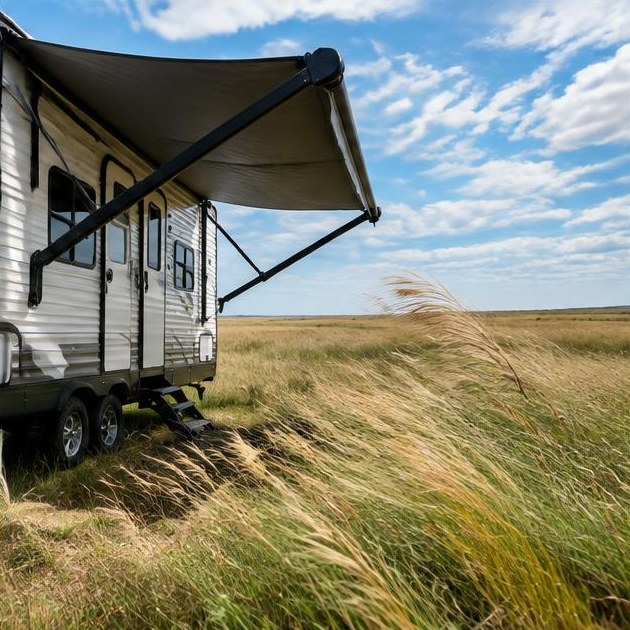
Follow your awning’s actual limits
There is no useful universal wind-speed rule for every RV awning. The installed model, condition and manufacturer’s instructions matter. Read those instructions before deciding whether to leave it extended. If conditions are changing or you are leaving the rig unattended, do not rely on a guess that the weather will stay calm. Treat retraction as part of managing the campsite, not an inconvenience to postpone until the fabric is already pulling hard.
Keep clear of damaged arms
An arm that is bent or moving out of alignment should not be forced back into shape while the awning is under load. Keep people away from the mechanism and stop unnecessary operation. Power and manual awnings have different procedures, so identify your model before seeking advice. Describe whether the fabric is extended, the motor responds and the arms are visibly uneven. This helps Robert understand the situation without asking you to dismantle the equipment.
Inspect fabric before another outing
Fraying edges, a tear or fabric rolling unevenly are reasons to look more closely. Damage size alone does not determine whether a patch or replacement is sensible; material condition and tear location matter too. Avoid adding fasteners or tension in ways the manufacturer does not allow. Take safely accessible photos and tell Robert when the damage happened. Awning fabric and arms may be separate repair decisions, but their condition and compatibility need assessing together.
Use sensors as equipment, not a promise
A wind sensor can be part of an awning setup, but its presence does not mean every gust or failure will be prevented. Follow its instructions, check its condition and understand how the awning responds. Do not leave damaged equipment extended because a sensor is installed. If you are considering an upgrade, discuss the awning model and compatibility first. Keep the basic routine of observing conditions and retracting when appropriate for the manufacturer’s guidance.
Arrange help where the RV is parked
R&C provides mobile awning repair for power and manual systems. Tell Robert if the awning is stuck open, since access and safe handling may affect the visit. At a Yukon RV park or a prairie campsite, provide room and site details as well as the town. Share photos without standing under damaged components. Robert can discuss the findings, parts and a quote for work. Ask how to secure the damaged assembly safely while you wait for an assessment.
Make retraction part of leaving camp
Decide who is responsible for the awning before the first outing away from the RV. A calm morning does not establish afternoon conditions, especially at an exposed campsite. Bring loose chairs, lights and hanging accessories out of the awning’s path before operating it. Keep the control accessible so retraction does not require searching through a packed vehicle. If the manufacturer calls for removing accessories first, build that step into the routine rather than improvising when gusts arrive. Check that the fabric rolls evenly and the assembly reaches its specified travel position. Stop if the arms bind or the roll becomes uneven. The best opportunity to put an awning away is while it is functioning normally, not after weather has loaded the fabric and made the mechanism difficult to control.
Watch how water changes the load
Wind is not the only weather concern for extended fabric. Rainwater can collect if an awning lacks the drainage arrangement required by its design. Use only the pitch adjustment and rain procedures described for that model. Do not assume an automatic dumping feature eliminates the need to monitor conditions. Standing beneath a sagging pocket or pushing it upward can expose you to a sudden release of water and movement of damaged parts. Keep people away and seek guidance if water has accumulated or the frame looks distorted. Avoid adding homemade braces or tying arms into a new position. Those changes can redirect forces into components that were not designed for them. After the weather passes, have new sagging, stretched fabric or altered arm alignment evaluated before extending the assembly again.
Document the awning without loading it again
If damage has already occurred, leave the assembly alone rather than cycling it repeatedly for a video. A useful set of observations can come from a safe position on the ground. Include the sidewall attachment area when visible, because movement there matters as much as a tear at the outer edge. Keep bystanders out of the work area, and do not stand beneath a loose roller or bent arm to find a label. Never tow with an awning unsecured or projecting into the travel path. Ask for model-specific instructions if it cannot return to its normal travel position. Prepare these details without taking the mechanism apart.
- State whether the fabric is fully extended, partly rolled or closed.
- Describe which arm looks displaced and whether an attachment appears loose.
- Photograph visible tears from outside the path of falling components.
- Note any motor response already observed without repeating a failed movement.
Give fabric a careful drying and storage routine
After normal use, follow the fabric maker’s cleaning directions instead of reaching for household solvents or a pressure washer. Brush away loose debris using an approved method before it rolls tightly into the canopy. If travel requires putting the awning away wet, reopen it to dry when conditions and the equipment instructions allow. Prolonged damp storage can contribute to odor and staining, while trapped twigs or grit can mark the fabric. Inspect the edges and attachment points during that drying session, not while leaning on the arms. Changes in the roll, fabric tracking or attachment deserve attention even if the canopy still extends. Store removable accessories separately so they cannot interfere with closure. This routine makes the next extension a planned setup rather than the first opportunity to discover damage from the previous trip.