
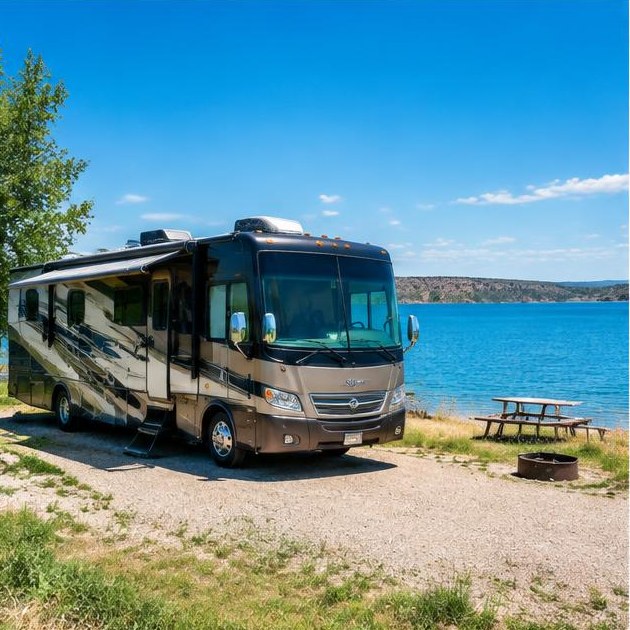
Begin while the RV is still at home
A campsite is a poor place to discover that equipment you depend on has not worked since storage. Give yourself time before departure to check the systems you intend to use. Start with the RV manuals and the condition of the rig, not a checklist built for a different trailer. Record anything that has changed. If you need help, tell Robert the departure date and the RV location so availability can be discussed before the weekend arrives.
Look at the towing basics
Check visible tire condition and lighting, and review the manufacturer’s guidance for brakes, bearings and suspension service. Do not continue towing if you notice a serious braking or wheel concern. A visual glance does not establish that every mechanical component is sound, but unusual wear, noises or changes in braking are useful reasons to arrange an assessment. Tell Robert whether the symptom developed during a recent highway trip and which part of the trailer appears affected.
Try water and appliances before packing
Operate fixtures and look for water appearing under cabinets or around connections. Note whether the water pump cycles when taps are closed. Check the refrigerator in the modes you will use at the lake, and allow the equipment to operate according to its instructions. Do not assume shore-power operation means propane mode is working. If an appliance will not light or you smell gas, stop and follow its safety instructions rather than repeatedly trying again.
Give slides and awnings room
Use the setup procedure in your manuals and keep people clear of moving equipment. Watch for uneven slide movement, grinding or seals that no longer sit correctly. Inspect safely visible awning fabric and arms before extending them. A windy lake site is not a reason to keep testing a damaged awning. If something is stuck or moving unevenly, stop forcing it and discuss the problem. Share whether the rig is level and what happens when you operate the control.
Plan the campsite details
At Lake Thunderbird, Lake of the Arbuckles or Lake Murray, know the campground and site details before arranging a mobile visit. Ask about property rules and on-site service permission. Explain whether the RV has shore power, water and safe room around it. R&C comes to campgrounds and state parks as well as homes and storage lots. For longer trips, ask about pricing by distance. The free 10-point safety check includes tires, lights, slides, awnings, A/C, appliances, plumbing and more.
Pack the departure checks in order
Give the final walkaround a fixed place in your departure routine, after loading but before pulling onto the road. Review hitching and towing instructions for the actual combination rather than copying another camper’s sequence. Loading can change how accessible compartments are and whether equipment has been left unsecured. Work without interruptions where possible; if someone distracts you, return to the last completed step. Check tire pressure cold against the appropriate specifications, not by appearance alone. The following reminders organize a walkaround but do not replace the complete towing procedure for your equipment.
- Confirm hitch components, safety connections and the breakaway arrangement using the specified procedure.
- Test required exterior lights with a helper or another safe viewing method.
- Secure doors, loose cargo, steps and exterior equipment for travel.
- Verify slides, stabilizers and awning are in their prescribed travel positions.
- Look beneath and around the rig for forgotten hoses, cables or obstacles.
Match the campsite to the electrical load
Before arrival, confirm the reservation’s electrical connection and the equipment your RV requires. Bring the correct undamaged connection equipment rather than planning to improvise at the pedestal. Once parked, inspect accessible cords and plugs before use and follow your electrical protection system’s setup instructions. Stop if a connection looks burned, loose or damaged. Air conditioning, cooking appliances and water heating can place substantial demands on the available supply, so understand which combinations your setup supports. A refrigerator that tested well at home can still be affected by an unsuitable campsite connection. Record any warning from installed monitoring equipment instead of repeatedly resetting protection. Keep electrical connections clear of standing water and route cords where they will not be pinched by doors or driven over during campsite traffic.
Keep drinking water and waste equipment separate
Organize hoses and fittings before loading the storage bay. Potable-water equipment belongs in a clean location away from sewer fittings, and each should be unmistakable when unpacked in low light. Follow the rig’s guidance for water pressure regulation and sanitation. Check caps, washers and hose condition while replacements are easy to obtain. At hookup, identify the proper connection before opening a valve; nearby fittings may serve different purposes. After filling or connecting, inspect inside for leaks rather than assuming a dry exterior means the plumbing is sound. Plan for the amount of fresh water and holding capacity your trip requires, especially at a site without full hookups. Teach everyone traveling with you which items belong to the drinking-water kit so a hurried cleanup does not mix the equipment.
Practice the arrival and departure routine
Arrive with enough daylight to evaluate clearance, ground conditions and the position of hookups. Before backing, agree on signals with your spotter and stop whenever you lose sight of that person. Follow the RV’s leveling and stabilization sequence before extending equipment. Check overhead branches and neighboring obstacles as well as the space beside the trailer. Leave room to reach utility connections without stretching hoses across traffic paths. Before going to the lake, confirm that the refrigerator is operating as intended and nothing is leaking after setup. For the return trip, reverse the campsite routine deliberately rather than relying on a hurried memory of arrival. A short written list of your own rig’s valves, latches and connections makes packing up easier when rain or a crowded checkout time changes the pace.